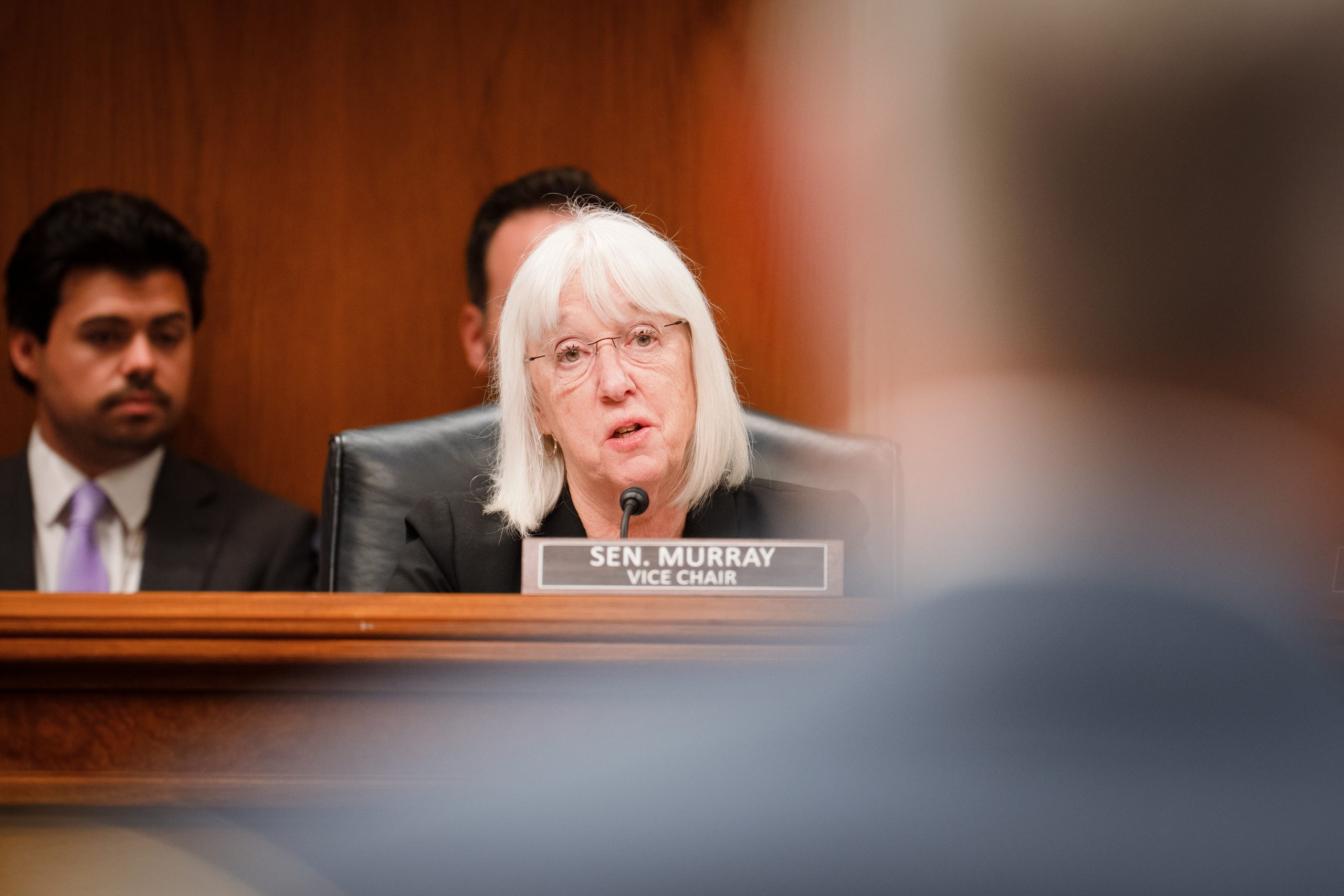
Washington, D.C. — Today, U.S. Senator Patty Murray (D-WA), Vice Chair of the Senate Appropriations Committee, joined Senators Catherine Cortez Masto (D-NV), Ron Wyden (D-OR), Dick Durbin (D-IL), and colleagues in demanding the Trump Administration abandon a plan that would prevent up to 700,000 Deferred Action on Childhood Arrivals (DACA) and Temporary Protected Status (TPS) recipients and other tax-paying immigrants from claiming tax credits they are eligible for.
The Internal Revenue Service (IRS) and the Department of Treasury are proposing a rule change that would prevent hundreds of thousands of taxpayers from claiming the Adoption Tax Credit, the American Opportunity Tax Credit, the Child Tax Credit, and the Earned Income Tax Credit. DACA and TPS recipients have been lawfully claiming these tax credits for decades.
“According to your own estimates, the proposed rule change could affect up to 700,000 taxpayers,” the Senators wrote in a letter to Treasury Secretary Scott Bessent and IRS CEO Frank Bisignano. “This would include more than 300,000 individuals living in households with a DACA recipient, two-thirds of whom are U.S. citizens and who have, on average, lived in the United States for over 28 years. The practical effect of these new regulations would be to deny tax credits to immigrants who are legally eligible for them and lawfully present in our country, and to create a byzantine and unworkable system for both tax preparers and taxpayers.”
“The Administration has no legal authority to change congressionally enacted tax law via regulation…” they continued. “Since the passage of PRWORA in 1996, no federal agency has interpreted refundable tax credits as federal public benefits restricted to qualified immigrants. If Congress intended for refundable tax credits to be treated as federal public benefits, it has had over 30 years to clarify the statute.”
“The proposed rule is clear regulatory overreach that would have disastrous impacts for lawfully present immigrants and their families who are legally eligible for refundable tax credits,” they concluded.
In addition to Senators Murray, Cortez Masto, Wyden, and Durbin, the letter was signed by Senators Tammy Duckworth (D-IL), Ben Ray Luján (D-NM), Alex Padilla (D-CA), Elizabeth Warren (D-MA), and Michael Bennet (D-CO).
The full letter is available HERE and below:
Dear Secretary Bessent and CEO Bisignano,
We are writing in response to the Notice of Proposed Rulemaking regarding the Application of the Personal Responsibility and Work Opportunity Reconciliation Act of 1996 (PRWORA) to the Refunded Portion of Certain Federal Refundable Tax Credits (REG-119882-25; RIN 1545- BS06). We are deeply concerned that this new rule will have a negative impact on immigrants with lawful status who have long contributed to the American tax system and who are legally eligible to receive refundable tax credits, but who will fall outside of the definition of taxpayers eligible to receive the refundable portion of these credits under the proposed regulation. It would also place a greater burden on taxpayers and tax preparers, who would be required to navigate a more complex filing process—prolonging the review and refund timeline and delaying refunds for eligible taxpayers.
Under the proposed rule, Deferred Action for Childhood Arrivals (DACA) recipients, individuals granted Temporary Protected Status (TPS), and other immigrants who have been living and contributing to our communities for decades would lose access to the refundable portions of the Earned Income Tax Credit, Additional Child Tax Credit, American Opportunity Tax Credit, or Adoption Tax Credit. According to your own estimates, the proposed rule change could affect up to 700,000 taxpayers. This would include more than 300,000 individuals living in households with a DACA recipient, two-thirds of whom are U.S. citizens and who have, on average, lived in the United States for over 28 years. The practical effect of these new regulations would be to deny tax credits to immigrants who are legally eligible for them and lawfully present in our country, and to create a byzantine and unworkable system for both tax preparers and taxpayers.
The Administration has no legal authority to change congressionally enacted tax law via regulation. As you know, the eligibility requirements for tax credits are established by the Internal Revenue Code. Taxpayers must satisfy the specific eligibility requirements set by Congress for each credit, including income, residency and identification number provisions. Since the passage of PRWORA in 1996, no federal agency has interpreted refundable tax credits as federal public benefits restricted to qualified immigrants. If Congress intended for refundable tax credits to be treated as federal public benefits, it has had over 30 years to clarify the statute. Congress has changed the identification number and other requirements for tax credits multiple times in that period, but it has never passed legislation that would treat refundable tax credits as federal public benefits under PRWORA.
In fact, one of the justifications offered for why the Administration’s proposed rule change excludes the refundable portion of the Premium Tax Credit (PTC) is that “Congress specifically addressed immigration status as it relates to the computation of and eligibility for the PTC.” While accurate, this observation undermines the argument that the Administration has the authority to read different eligibility requirements into the tax code. Congress has also been clear about the eligibility requirements for other refundable tax credits, including by adding identification number requirements that effectively bar undocumented immigrants from claiming them. Just last year, Congress added new Social Security Number requirements for both the Child Tax Credit and American Opportunity Tax Credit. These changes mark the second time in nine years that Congress has amended the eligibility requirements for the Child Tax Credit. The Earned Income Tax Credit also contains congressionally mandated Social Security Number requirements, established in PRWORA itself in a separate section of the legislation from the restrictions on federal public benefits, indicating that Congress did not believe the federal public benefits language was applicable to tax credits.
The proposed regulation also creates an arbitrary and inaccurate distinction between the refundable and nonrefundable portions of the affected tax credits. Many factors go into calculating a taxpayer’s tax liability. While there are statutory rules affecting how much of a tax credit a taxpayer can claim in excess of their tax liability, this “refundable portion” is not a separate program from the rest of the tax code. When a refundable tax credit exceeds a taxpayer’s liability, it is simply considered an overpayment of tax under section 6401 of the tax code, not a “grant” or “benefit”. As such, it is certainly not a federal public benefit under the PRWORA definition, which does not reference taxes or overpayments at all.
The Administration’s proposed rule would also create unnecessary administrative hurdles for taxpayers, tax preparers, and the IRS. Under the proposed rule, taxpayers claiming the refundable portion of the affected credits would be required to attest, under penalty of perjury, that they are a U.S. citizen, U.S. national, or a “qualified” immigrant under PRWORA. An inaccurate attestation would expose taxpayers to significant civil or criminal penalties. For many immigrants – and for organizations providing tax preparation assistance– determining whether an individual is a “qualified” immigrant is complex. The definition encompasses some immigration statuses while excluding many others, and eligibility can depend on highly technical aspects of immigration law and pending applications. As a result, some taxpayers may mistakenly conclude that they qualify, while others may incorrectly determine that they do not. Some may inadvertently attest to qualified status and face potential criminal liability, while other eligible individuals may forgo claiming these tax credits due to confusion, fear, or uncertainty.
Furthermore, under this rule change, the IRS would be tasked with tracking the additional immigration status information that taxpayers would be required to provide when filing their returns. Unlike other public benefit programs, the IRS does not maintain a system to verify a taxpayer’s immigration status. The implementation of these changes requiring IRS to collect and retain information about immigration status departs from the IRS’s longstanding practice and could discourage immigrants unsure about their status from filing their taxes at all. This chilling effect would make it more difficult for the IRS to collect revenue and undermine the IRS’s primary mandate to collect taxes efficiently and fairly. It would also raise serious questions about the IRS’s compliance with the confidentiality laws mandated by the Internal Revenue Code.
The proposed rule is clear regulatory overreach that would have disastrous impacts for lawfully present immigrants and their families who are legally eligible for refundable tax credits. We hope that you will withdraw this rule. Thank you for your consideration.
Sincerely,
###