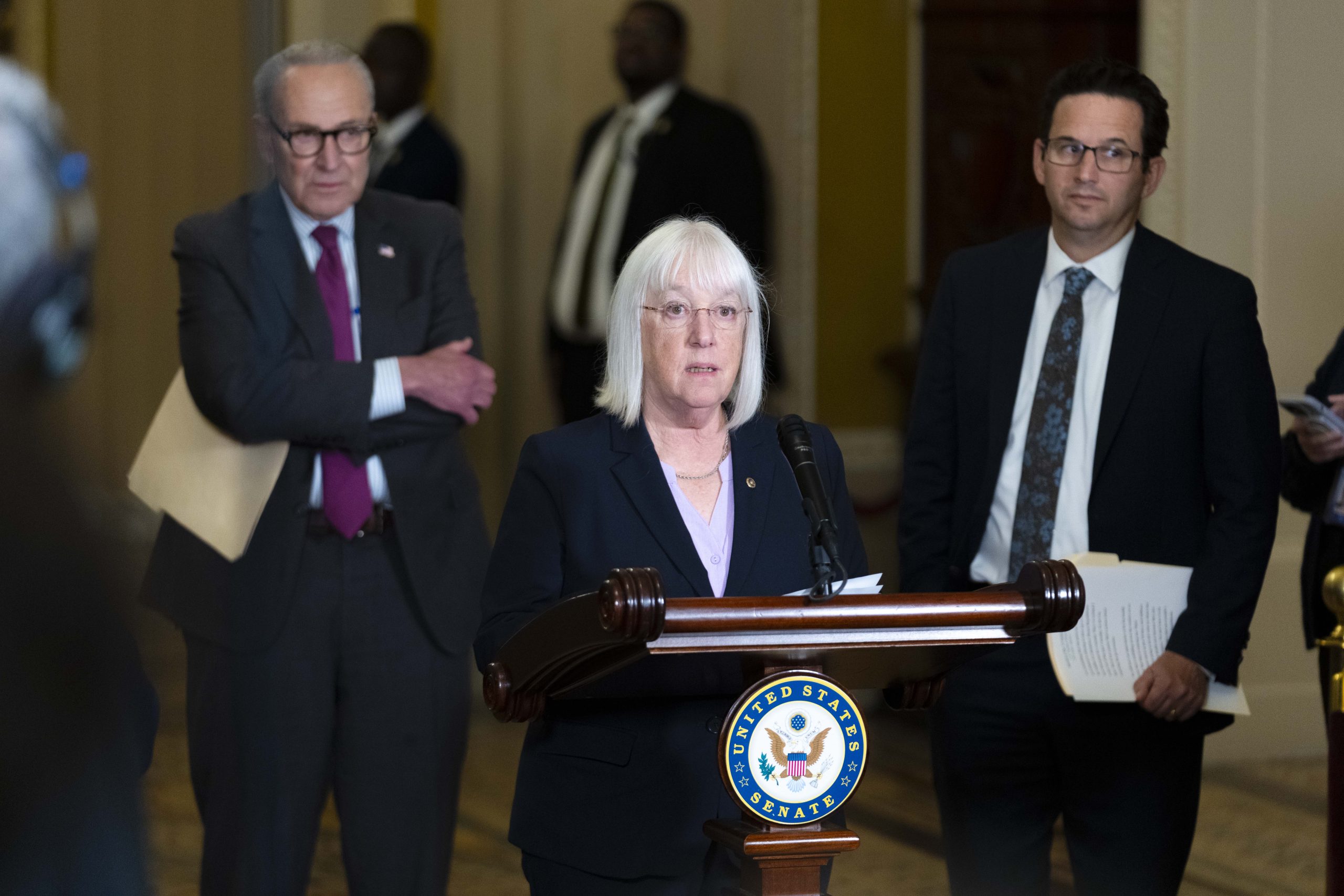
Washington, D.C. — Today, U.S. Senator Patty Murray (D-WA), Vice Chair of the Senate Appropriations Committee, joined Senators Chuck Schumer (D-NY), Jack Reed (D-RI), Susan Collins (R-ME), and Lisa Murkowski (R-AK) in a bipartisan push for the U.S. Department of Health and Human Services (HHS) to release funds for the Low-Income Home Energy Assistance Program (LIHEAP) as swiftly and at the highest level possible. Currently, the Trump Administration is sitting on $4 billion in federal LIHEAP dollars that have yet to be distributed this year.
“As Congress works to finalize the Fiscal Year 2026 appropriations bill for the Department of Health and Human Services, we urge you to immediately release the highest amount of Low-Income Home Energy Assistance Program (LIHEAP) funding available under the Continuing Resolution,” the senators wrote.
The bipartisan group of Senators say the federal LIHEAP funding is a crucial lifeline that keeps vulnerable citizens safe and warm during winter by helping low-income households and seniors on fixed incomes pay their energy bills. The program also helps reduce energy costs through improved energy efficiency initiatives. Nationwide, an estimated 6 million households received assistance with heating and cooling costs through LIHEAP over the last year. States and tribes typically receive their LIHEAP allocations from HHS by early November. Eligibility for LIHEAP is based on income, family size, and the availability of resources. While eligibility varies by state, most applicants must have a household income below 150 percent of the federal poverty guideline or 60 percent of the state median income.
The Trump Administration has proposed eliminating LIHEAP—a proposal that Senator Murray has forcefully pushed back on. The Senate’s Labor-HHS-Education and Related Agencies Appropriations bill for FY26 that Senator Murray helped negotiate, would provide a $20 million increase for LIHEAP to $4.045 billion. LIHEAP applications are now open for all income-eligible households. Senior citizens and those receiving Social Security Disability or SSI benefits are encouraged to apply as early as possible, but applications will be open to everyone through spring of 2026 — or until the funding is exhausted. To find out if you are eligible and apply for LIHEAP, visit the Washington Department of Commerce website.
According to a new forecast from the National Energy Assistance Directors Association, home heating costs are estimated to rise nearly 8 percent over last winter on average, with costs for heating with electricity forecasted to increase even higher–to 10 percent above last year—as the Trump administration pushes clean energy cuts that are driving energy costs up.
In addition to Murray, Schumer, Reed, Collins, and Murkowski, the letter was signed by U.S. Senators Richard Blumenthal (D-CT), Lisa Blunt Rochester (D-DE), Cory Booker (D-NJ), Catherine Cortez Masto (D-NV), Tammy Duckworth (D-IL), Richard Durbin (D-IL), Ruben Gallego (D-AZ), Kirsten Gillibrand (D-NY), Chuck Grassley (R-IA), Maggie Hassan (D-NH), Mazie K. Hirono (D-HI), Mark Kelly (D-AZ), Angus King (I-ME), Amy Klobuchar (D-MN), Ben Ray Luján (D-NM), Edward J. Markey (D-MA), Jeff Merkley (D-OR), Jacky Rosen (D-NV), Bernie Sanders (I-VT), Jeanne Shaheen (D-NH), Tina Smith (D-MN), Dan Sullivan (R-AK), Chris Van Hollen (D-MD), Mark Warner (D-VA), Peter Welch (D-VT), Sheldon Whitehouse (D-RI), and Ron Wyden (D-OR).
The full text of the letter to HHS Secretary Kennedy is available HERE and below.
Dear Secretary Kennedy:
As Congress works to finalize the Fiscal Year 2026 appropriations bill for the Department of Health and Human Services, we urge you to immediately release the highest amount of Low-Income Home Energy Assistance Program (LIHEAP) funding available under the Continuing Resolution.
As the main federal program that helps low-income households and seniors with their energy bills, LIHEAP provides critical assistance during the cold winter and hot summer months. October marked the start of the heating season for many states, and with temperatures already dropping, low-income families and seniors are feeling additional strains on their household budgets.
As state agencies and tribes activate their LIHEAP programs for the coming winter, it is crucial that they have the resources on hand to help low-income households and seniors as soon as possible. As such, we request that you quickly release LIHEAP funds at the highest level possible, so that low-income households do not have to choose between paying for heat and affording other necessities like food or medicine.
We look forward to working with you on this critical program, and thank you for your attention to our concerns and those of our constituents.
Sincerely,
###