Republicans just passed $1 trillion in health care cuts and are kicking roughly 15 million people off their health care; WA hospitals will lose $662 million in Medicaid revenue every year
***WATCH FULL EVENT HERE; PHOTOS AND B-ROLL HERE***
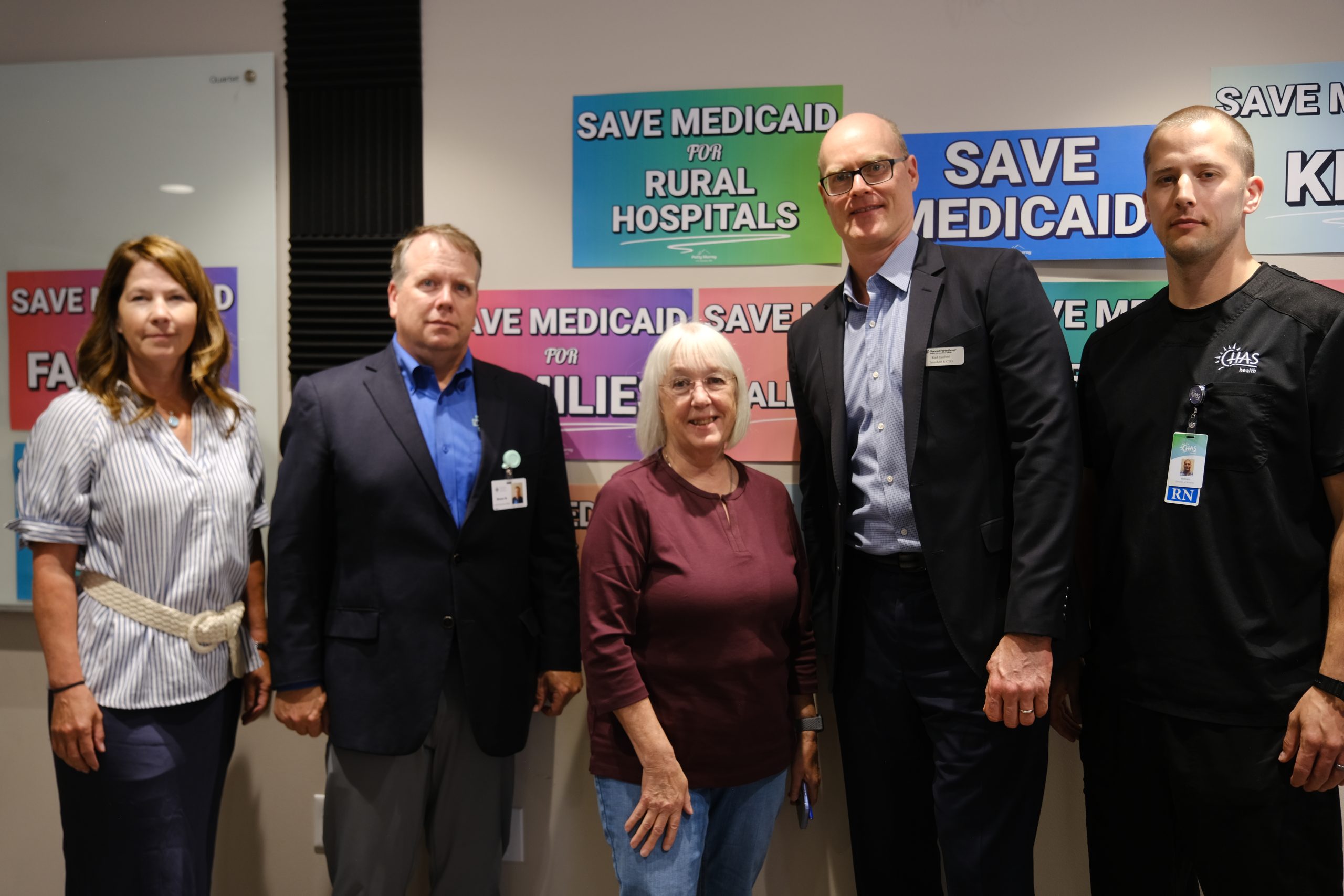
Walla Walla, WA — Today, U.S. Senator Patty Murray (D-WA), Vice Chair of the Senate Appropriations Committee, held a roundtable discussion with hospital and community health center CEOs and providers from Eastern Washington to call attention to how the health care cuts in Republicans’ reconciliation bill, the One Big Beautiful Bill Act, are a major blow to hospitals and community health centers across Eastern Washington and will undermine access to health care—especially in rural areas.
Joining Senator Murray for the event were: Shane McGuire, CEO, Columbia County Public Hospital District; Christy Bracewell Trotter, CEO Yakima Valley Farm Workers Clinic; Will Matney, Director of Nursing at CHAS Health; and Karl Eastlund, CEO of Planned Parenthood of Greater Washington and North Idaho.
The Republican reconciliation bill, which was signed into law last month, cuts more than $1 trillion from Medicaid and the ACA over the next 10 years and will make health care more expensive and harder to access. The nonpartisan Congressional Budget Office (CBO) estimates that Republicans’ health care cuts will terminate health insurance for roughly 15 million Americans nationwide.
“Under this bill, Washington state is expected to lose between $31 and $51 billion dollars in federal Medicaid funding over the next 10 years. We are looking at the largest-ever cuts to Medicaid—or as we call it, Apple Health. At least 250,000 people in Washington will lose Apple Health coverage under this bill. That’s already devastating,” Senator Murray said. “We are here because Eastern Washington is going to get hit especially hard by this. This is one of the areas in our state with the highest Medicaid enrollment. This is an area with lots of families who benefit from health care tax credits. And this is an area without as many health care providers—the rural hospitals and health care centers here, which Republicans have put at risk—are critical to families. Families need to understand what is happening, and they need to know Democrats are going to continue fighting to prevent the damage from these cuts and support our community health centers and hospitals.”
In Washington state, nearly 2 million people—roughly 1 in 5—are enrolled in Apple Health, the state’s Medicaid program. Washington’s 5th Congressional District has the highest Medicaid enrollment in Washington state, with over 230,000 people—29 percent of all residents living in the district—reliant on Apple Health, including 54 percent of children. About 400,000 Washingtonians are expected to lose health care coverage under the Republican bill, including at least 250,000 who will lose Apple Health coverage and as many as 150,000 who will be newly priced out of the state’s health care exchange, Washington Healthplanfinder. Hospitals in Washington state could lose at least $662 million in Medicaid revenue every year under the bill—forcing hospitals to lay off staff, cut services, or close their doors entirely. Overall, Washington state is expected to lose between $31 billion and $51 billion in federal Medicaid dollars over the next decade. Last year, Washington had an uninsured rate of 4.8 percent—the lowest in the country—but the Republican bill is expected to balloon that number into the double digits.
“The negative impact this bill will have on rural healthcare access cannot be disputed. The issue is how it unfolds over time. When rural health systems begin cutting local services or closing in the not-to-distant future, people may not connect this moment with those results. This won’t be sudden death—it will be a slow, agonizing choking out of rural healthcare services and access to care,” said CEO Shane McGuire, CEO, Columbia County Public Hospital District.
“The best way we can save Medicaid is by saving Medicaid costs by investing in primary care to address the chronic conditions 1 in 3 Americans are currently living with today. Community Health Centers have proven their ability to deliver on reducing downstream health care costs,” said Christy Bracewell Trotter, CEO Yakima Valley Farm Workers Clinic.
“There are a lot of misconceptions held about people on Medicaid. But I can tell you from personal experience of the patients I work with – they are working, going to school, raising a family, and contributing to the betterment of our communities. And I can tell you that without Medicaid coverage, many will avoid care because they know they cannot afford it. They will not seek care until they are too sick to avoid it or they will die from preventable causes,” said Will Matney, Director of Nursing at CHAS Health, a non-profit Federally Qualified Health Center (FQHC) that provides care to over 122,000 patients throughout Spokane County, the Latah Community, and the Lewis-Clark Valley.“One of the reasons that I chose to work at a Community Health Center is our mission to serve all residents of our community. That means that we serve people regardless of whether they have insurance or not. If they don’t have insurance, we aren’t reimbursed, but we still care for them. That is our commitment to our community, but it is difficult to sustain without adequate funding.”
“Planned Parenthood care is at risk across the country, including here in Washington. Trump’s Republican budget bill effectively defunds Planned Parenthood affiliates by blocking us from Medicaid, which means many patients will be forced to pay for care out of pocket or go without care entirely. Federal Medicaid dollars already can’t pay for abortions, so Trump and Republicans are targeting Planned Parenthood’s preventive health care services like cancer screenings, STI tests, and birth control. Combined with the provisions that will remove millions of people across the country from their health insurance, this bill will be devastating for reproductive health care access. It is estimated that up to 200 Planned Parenthood health centers nationwide will be forced to close, and that supportive states like Washington will be hit the hardest. We will continue to fight to keep our doors open and provide high quality health care to our patients, and we are thankful to have Senator Murray as such a strong partner in this fight,” said Karl Eastlund, CEO of Planned Parenthood of Greater Washington and North Idaho.
Nationwide, the Republican health care cuts represent a more than $400 billion dollar hit to America’s hospitals—which are the sixth-largest employer in the country. One estimate found that over 330 rural hospitals will likely be forced to close or scale back their services, which will force more Americans to travel further for maternity care and emergency rooms, and face longer wait times. An estimated 477,000 health workers will lose their jobs as a result of the Republican cuts to Medicaid.
Senator Murray has held constant recent events—including multiple events in Washington state, and in Central Washington just yesterday—to sound the alarm on Republicans’ devastating reconciliation bill and encourage constituents to raise their voices and call on their Members of Congress to oppose the legislation. Senator Murray and Democrats forced Republicans to take dozens of tough votes over a nonstop 30-hour “vote-a-rama,” which came after Democrats forced a full reading of every word of Republicans’ 940-page bill. During vote-a-rama, Senator Murray put forward an amendment to strike a provision of the legislation that achieves anti-abortion extremists’ long-sought goal of “defunding” Planned Parenthood; Republicans blocked the amendment. Senator Murray spoke repeatedly on the Senate floor during debate over the bill, laying out in detail the harm the legislation would cause. Senator Murray also spoke out repeatedly on the Senate floor against Republicans’ use of a depictive so-called “current policy baseline” to hide the true cost of their deficit-busting tax cuts for billionaires.
###