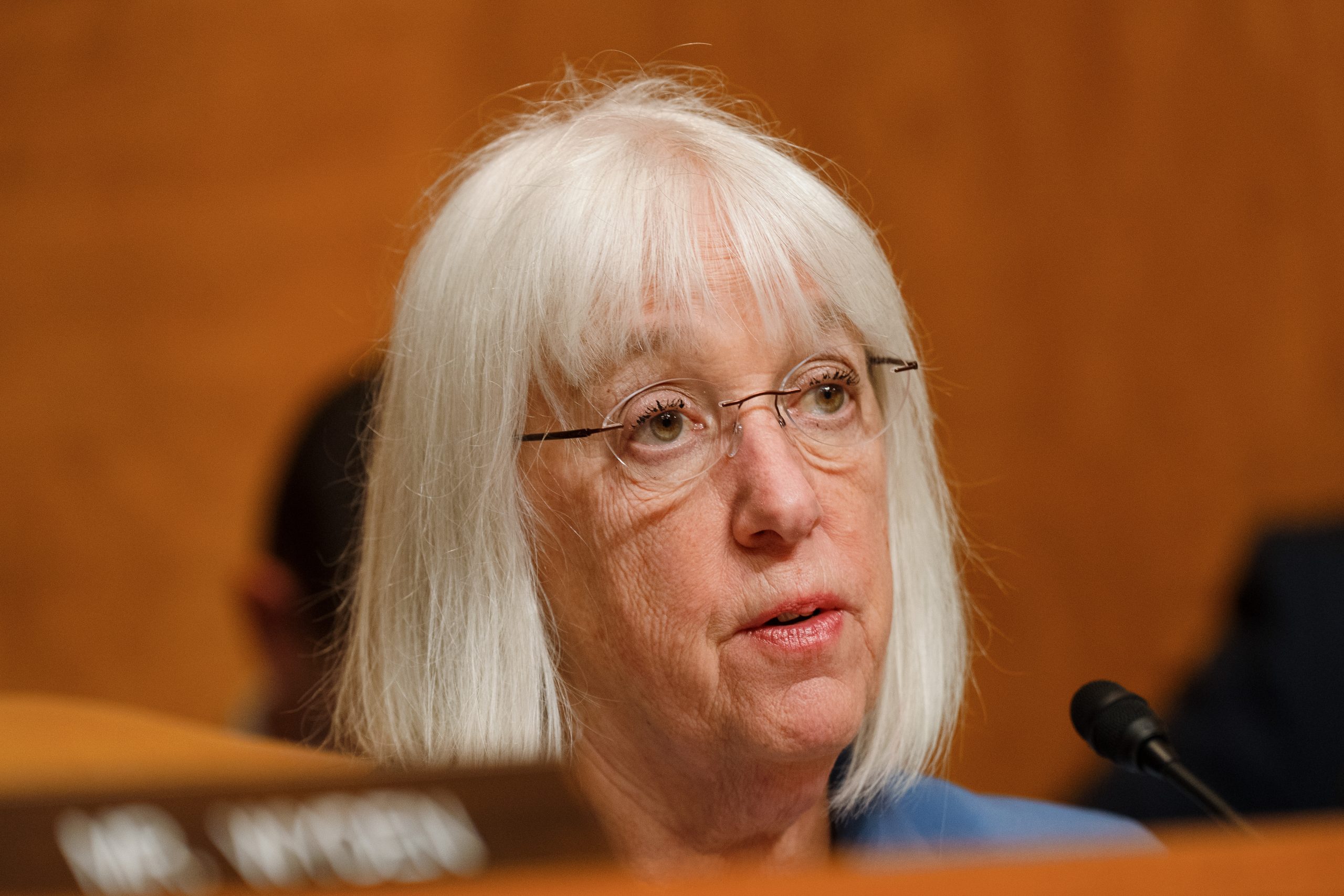
Murray, lawmakers: “We urge you to promptly review these concerns and take immediate steps to improve conditions and practices at NWIPC… Violations of the law or any abuse of human rights will not go unnoticed or unchallenged.”
ICYMI: Senator Murray Condemns Egregious Use of Force by ICE as Constituent is Mauled by Attack Dog, Demands Release from NWIPC to Receive Appropriate Medical Care
KUOW: Inside the black box of ICE detention in Tacoma, she watched her wedding day come and go
***LETTER HERE***
Washington, D.C. — Today, U.S. Senator Patty Murray (D-WA), Vice Chair of the Senate Appropriations Committee, led Members of the Washington state Congressional delegation in a letter to Acting Director of U.S. Immigration and Customs Enforcement (ICE) Todd Lyons, expressing grave concerns with conditions at the Northwest ICE Processing Center (NWIPC) in Tacoma, Washington and demanding answers to a long list of questions regarding overcrowding and lack of access to medical services, food, and legal counsel for individuals detained at the facility. The population at NWIPC has ballooned over the past year under the Trump administration’s indiscriminate and cruel mass deportation campaign, nearing—and at times exceeding—the facility’s maximum capacity of 1,575.
Joining Senator Murray in sending the letter to ICE were: Senator Maria Cantwell (D-WA) and U.S. Representatives Suzan DelBene (D, WA-01), Rick Larsen (D, WA-02), Emily Randall (D, WA-06), Pramila Jayapal (D, WA-07), Kim Schrier (D, WA-08), Adam Smith (D, WA-09), and Marilyn Strickland (D, WA-10).
“Our offices have received reports from local service providers and advocates that conditions and access to services at NWIPC have deteriorated in the last year as Immigration and Customs Enforcement (ICE) has chosen to detain more individuals at the facility,” the Members wrote in their letter. “In June, detained individuals were reportedly transferred to Alaska—far away from their families and legal representatives—because NWIPC reached capacity. None of this is remotely acceptable—you and the entire Trump administration have a basic moral and legal obligation to the people who have been detained and are under your care.”
“It is well established at this point that this administration is not prioritizing detaining violent criminals, but instead is detaining mostly peaceful, law-abiding immigrants with no criminal record who work hard and contribute to our communities,” the lawmakers continued. “With this in mind, we urge ICE to release noncitizens who do not pose a threat to public safety and to ensure necessary staff levels at NWIPC to protect the safety and basic dignity of the people in its custody.”
In the letter, the Members raise concern over the lack of medical care for individuals detained at NWIPC and other ICE facilities, writing: “We are deeply concerned that the facility does not have sufficient medical staff and dedicated space to adequately provide medical care to the increased number of detained noncitizens. Additionally, we are incredibly concerned about challenges detainees face in accessing behavioral health care and other specialty care.”
Recently, Senator Murray called attention to the violent assault of Wilmer Toledo-Martinez in Vancouver, Washington—condemning the officers who sicced an attack dog on Wilmer, despite him not resisting arrest, and calling for Wilmer to be immediately released from ICE custody. Wilmer is currently being held at NWIPC, where he has been unable to obtain adequate medical care. In a visit to NWIPC by Senator Murray’s staff in August, facility staff indicated that NWIPC only employed four behavioral health staffers for a population of approximately 1,500 detainees. There were reports of at least two suicide attempts at NWIPC in April. In July 2024, after the death of a man detained at NWIPC, Senator Murray requested a comprehensive review of the quality and accessibility of medical services for individuals in ICE custody from the Government Accountability Office (GAO)—that review is currently underway.
The lawmakers’ letter also draws attention to reports from advocates that at least three pregnant women detained at NWIPC over the past year have been unable to receive appropriate medical care. Advocates also shared that at least one pregnant woman was shackled during transportation, which violates agency policy and raises concerns that medical information, such as whether a woman is pregnant, is not being properly documented by the facility. Senator Murray has long fought against the mistreatment of pregnant women in detention, including by pushing for her legislation—the Stop Shackling and Detaining Pregnant Women Act—to end the practice of shackling pregnant women in ICE detention. Murray also led an oversight letter to ICE in September demanding answers and accountability about the mistreatment of pregnant women in detention facilities under the Trump administration.
The Members continued by raising concerns over the inadequate provision of meals at NWIPC and difficulty that detained individuals have in accessing legal counsel, writing: “Attorneys have faced significant delays to meet with their clients, making adequate legal counsel more difficult. This has become especially challenging when immigration courts advance noncitizens’ hearings by months without sufficient warning. At times, attorneys have had to wait at the facility for up to 6 hours to see their clients.”
The letter concludes by requesting answers to a list of questions by January 16th regarding capacity and staffing levels at NWIPC, the provision of food and medical care, access to legal counsel, treatment of pregnant women, and recent facility visits. “Please understand that we are paying close attention to the conditions at NWIPC—and your management of this facility,” the Members wrote. “We urge you to promptly review these concerns and take immediate steps to improve conditions and practices at NWIPC to comply with existing standards and laws and ensure that people in immigration detention are being treated with basic dignity and respect. Violations of the law or any abuse of human rights will not go unnoticed or unchallenged.”
Senator Murray and other members of Washington state’s Congressional delegation have been conducting oversight of NWIPC throughout this year, despite the Trump administration’s efforts to block Congressional oversight of federal immigration detention facilities. After a protracted legal battle over Washington state’s ability to enforce health and safety standards at NWIPC, a federal appeals court ruled in August that the state should be allowed to enforce such standards at the detention center, and that failure to comply could result in fines of up to $10,000 per violation.
Senator Murray has championed comprehensive and humane immigration reform throughout her time in Congress, and has consistently pushed for greater oversight of conditions at NWIPC. In 2024 at a Senate Appropriations Homeland Security Subcommittee hearing, Murray asked then-DHS Secretary Alejandro Mayorkas to commit to an independent investigation of conditions at NWIPC and pressed him on the overuse of solitary confinement at ICE detention facilities—which Senator Murray has consistently spoken out against. While Chair of Appropriations, Senator Murray secured language in the Homeland Security Appropriations bill for fiscal year 2024—which was signed into law in March 2024—to ensure stronger oversight of federal detention facilities and provisions to increase transparency. Senator Murray is also an original cosponsor of the Dignity for Detained Immigrants Act, which would set humane standards for detention facilities and increase oversight. Murray was outspoken in her opposition to the Laken Riley Act earlier this year, arguing it threatened civil liberties and would divert resources away from detaining true threats to public safety.
The lawmakers’ full letter to ICE is available HERE and below:
We are writing to share our grave concerns with conditions at the Northwest ICE Processing Center (NWIPC) in Tacoma, Washington and to request information about access to medical services, food, and legal counsel for detained noncitizens at the facility. Our offices have received reports from local service providers and advocates that conditions and access to services at NWIPC have deteriorated in the last year as Immigration and Customs Enforcement (ICE) has chosen to detain more individuals at the facility. In June, detained individuals were reportedly transferred to Alaska—far away from their families and legal representatives—because NWIPC reached capacity.
None of this is remotely acceptable—you and the entire Trump administration have a basic moral and legal obligation to the people who have been detained and are under your care.
You must ensure the facility complies with the 2011 Performance-Based National Detention Standards as revised in 2016 (PBNDS 2011) to keep detained noncitizens safe and healthy while protecting the rights they are entitled to under law.
It is well established at this point that this administration is not prioritizing detaining violent criminals, but instead is detaining mostly peaceful, law-abiding immigrants with no criminal record who work hard and contribute to our communities. With this in mind, we urge ICE to release noncitizens who do not pose a threat to public safety and to ensure necessary staff levels at NWIPC to protect the safety and basic dignity of the people in its custody.
Medical Care
The federal government has a moral and legal obligation to protect the health of individuals in its custody. We have had long-standing concerns about access to medical services in ICE detention facilities. In recent years, several members of the Washington Congressional delegation requested that the Government Accountability Office (GAO) conduct a comprehensive review of the quality and accessibility of medical services for individuals in ICE custody. At times this year, NWIPC has exceeded 1,500 individuals in custody, nearing the facility’s maximum capacity of 1,575 individuals. We are deeply concerned that the facility does not have sufficient medical staff and dedicated space to adequately provide medical care to the increased number of detained noncitizens.
Additionally, we are incredibly concerned about challenges detainees face in accessing behavioral health care and other specialty care. During an August 2025 site visit, facility staff indicated the facility employed only four behavioral health staffers. There were reports of at least two suicide attempts at NWIPC in April. It is plainly inadequate to have four behavioral health staff serving the 1,500 detainees under the facility’s care, especially given the fact that serious behavioral health issues frequently emerge under the severe stress of detention. We are also alarmed by reports from advocates with access to the facility that at least three detained pregnant women at NWIPC have been unable to receive appropriate medical care, even after they request specialty prenatal care appointments. Regular exams such as ultrasounds are necessary to monitor development and ensure a healthy pregnancy. Advocates also shared that at least one pregnant woman was shackled during transportation, which violates agency policy and raises concerns that medical information, such as whether a woman is pregnant, is not being properly documented by the facility.
Food
The Seattle Times recently reported on the inadequate provision of meals at NWIPC as the detained population has increased. Advocates who speak with detainees have shared that meals are provided late and, in some cases, detainees did not receive three meals per day. Detainees have made complaints about food and sanitation for many years, and we urge the facility to be responsive to the nutritional needs of individuals in its custody. Legal service providers with access to the facility have also shared that detainees waiting for video teleconferencing (VTC) hearings may miss meals. We urge the facility to ensure that all detained noncitizens, including those awaiting hearings or visits, are provided a minimum of three meals per day, as required by national detention standards (PBNDS 2011).
Access to Legal Counsel
Access to legal resources for noncitizens in immigration detention supports their ability to understand their rights and navigate immigration court, preventing backlogs in the immigration court system. Detained noncitizens at NWIPC face several concerning barriers to accessing legal counsel. Attorneys have faced significant delays to meet with their clients, making adequate legal counsel more difficult. This has become especially challenging when immigration courts advance noncitizens’ hearings by months without sufficient warning. At times, attorneys have had to wait at the facility for up to 6 hours to see their clients. This August, two of the seven attorney visitation rooms were being used as Virtual Attorney Visitation rooms (VAVs) and two were being used for video teleconferencing (VTC) hearings, leaving only three rooms available for attorneys to meet with their clients in person. We have also heard from advocates with access to the facility that, at times, only one visitation room was available and interviews for facility staff were being conducted in these attorney visitation rooms.
In the Fiscal Year 2023 Consolidated Appropriations Act, Congress provided $10,000,000 for ICE to improve legal resources for noncitizen detainees, including to expand video attorney visitation. During an August 2025 site visit, NWIPC staff indicated that the facility recently implemented a new scheduling system to reserve attorney visitation rooms. We ask that the facility work with attorneys to resolve any issues that arise with the new system expeditiously so as not to delay access to legal counsel. We urge you to improve access to legal counsel by ensuring attorney visitation rooms remain available for attorneys to meet with their clients.
Given these concerns, we request answers to the following questions by January 16, 2026:
- What is the maximum capacity of NWIPC, as determined by the fire marshal? As of November 1, 2025, how many individuals were detained at the facility?
- How many staff were employed by NWIPC on January 20, 2025? Of this cohort, how many were trained and certified medical services providers who routinely provided direct medical services?
- As of November 1, 2025, how many staff were employed by NWIPC? Of this cohort, how many were trained and certified medical services providers who routinely provide direct medical services?
- As of November 1, 2025, how many pregnant women were detained at NWIPC? How often have these women requested, and how often have they received, prenatal care appointments with a specialist?
- How many days in the last six months has the facility not provided three meals each day to every noncitizen in its custody?
- Why did the facility not provide three meals each day to every noncitizen?
- For each day, for how many noncitizens were three meals not provided?
- What is the current status of the Legal Orientation Program (LOP) at NWIPC? Are noncitizens able to access LOP daily? What are the hours of availability each day? Outside of hours, are there any other restrictions on daily LOP access, and if so, what are they and why are they in place?
- How many attorney visitation rooms are currently available for in-person attorney meetings? How many attorney visitation rooms are currently available for virtual attorney meetings?
- In the last six months, have the attorney visitation rooms been used for a purpose other than attorney-client meetings (in-person or virtual) or video teleconferencing (VTC) hearings?
- When were the most recent facility visits by the Department of Homeland Security’s (DHS) Office of Inspector General, DHS Office of the Immigration Detention Ombudsman (OIDO), the DHS Office for Civil Rights and Civil Liberties, and ICE oversight personnel (whether the Office of Professional Responsibility or otherwise)? What, if any, recommendations were made after each visit? What progress has been made to implement such recommendations?
- OIDO issued a report in November 2024 following an inspection of NWIPC. While 11 of the recommendations have been addressed, one remains outstanding. What progress has been made on implementing the remaining recommendation?
Thank you for your attention to this matter.
Please understand that we are paying close attention to the conditions at NWIPC—and your management of this facility.
We urge you to promptly review these concerns and take immediate steps to improve conditions and practices at NWIPC to comply with existing standards and laws and ensure that people in immigration detention are being treated with basic dignity and respect.
Violations of the law or any abuse of human rights will not go unnoticed or unchallenged.
Sincerely,
###