Current effective tariff rate is 17.4 percent—the highest since 1935; New analysis finds Trump’s tariffs likely to push 875,000 Americans into poverty next year
Trump’s tariffs will cost Washington state nearly 32,000 jobs; $2.2 billion in revenue over the next four years if fully implemented
***VIDEO OF THE EVENT HERE; PHOTOS AND B-ROLL HERE***
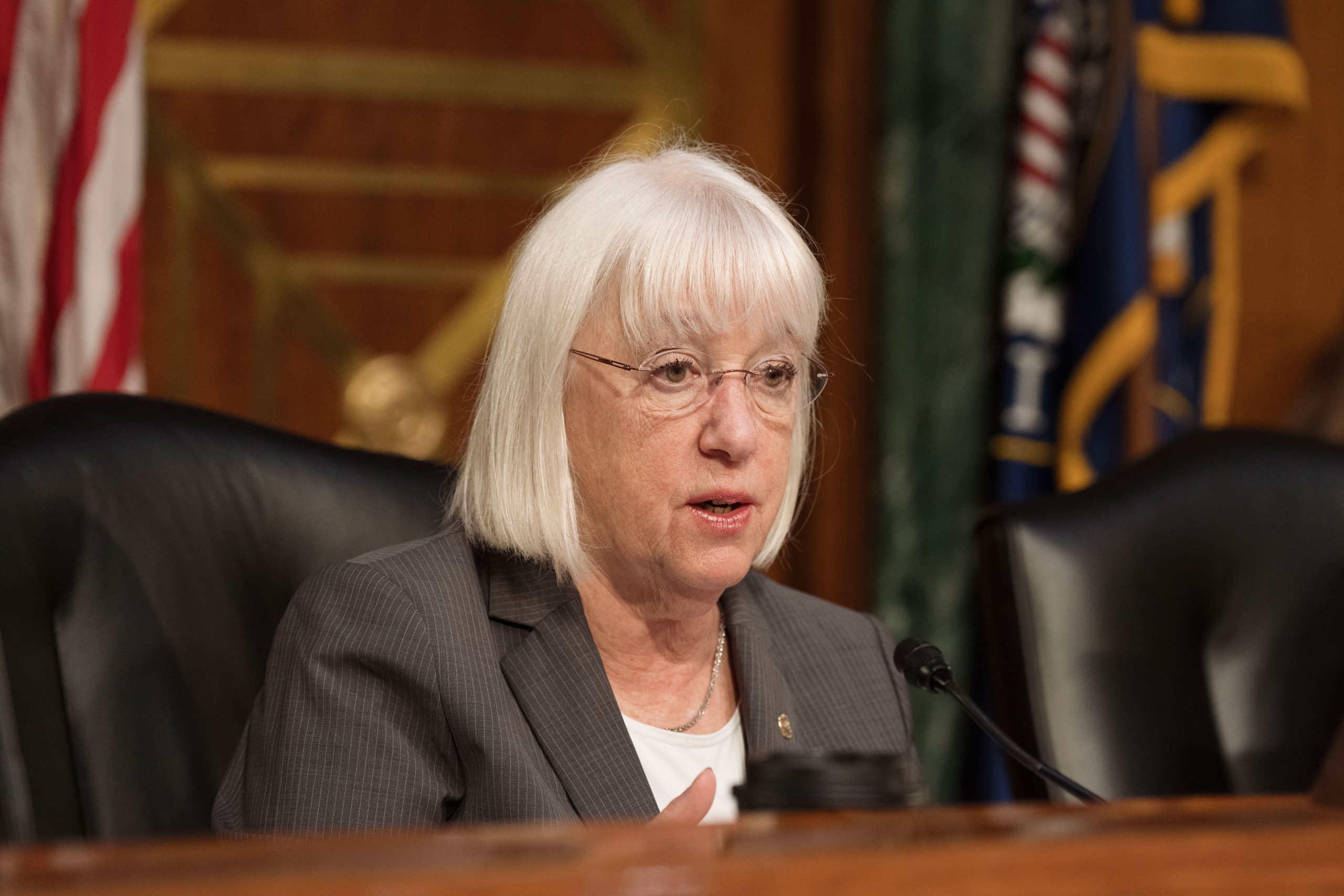
Vancouver, WA — On Monday, U.S. Senator Patty Murray (D-WA), Vice Chair of the Senate Appropriations Committee, held a roundtable discussion at Short & Sweet in downtown Vancouver with Southwest Washington small business owners to discuss how President Trump’s trade war and his tariffs on nearly every country are driving down business, raising costs, and creating chaos for small businesses, and Washington state’s overall economy.
Right now, the effective tariff rate in America is 17.4 percent, the highest tariff rate since 1935. The latest analysis from Yale Budget Lab this month found that Trump’s tariffs will likely increase the number of Americans living in poverty by 875,000 in 2026. Also this month, a nonpartisan analysis by the Washington State Office of Financial Management found that if the current tariffs stay in effect for the next four years, they will cost Washington state up to 25,000 jobs—and if Trump’s August 1st “Liberation Day” tariffs are fully implemented, they would cost Washington state $2.2 billion and 31,900 jobs over the next four years and significantly drive up the cost of food, clothing, cars, and much more. Washington state has one of the most trade-dependent economies of any state in the country, with 40 percent of jobs in the state tied to international commerce. In 2024, Washington exported $57.8 billion of goods to the world, according to the Office of the U.S. Trade Representative (USTR), making Washington state the 9th-largest state exporter of goods last year. Washington state is also the top U.S. producer of apples, blueberries, hops, pears, spearmint oil, and sweet cherries—all of which risk losing vital export markets due to retaliatory tariffs from key trading partners including Canada.
Joining Senator Murray at the roundtable discussion were: Janet Kenefsky, Chief Operating Officer of the Greater Vancouver Chamber of Commerce; Alan O’Hara, owner of When the Shoe Fits; Sonny Mouy, owner of Short & Sweet; Marty Lopes, owner of Terrain Coffee; and Ann Matthews, owner of Arktana/Bigfoot Mountain Outfitters.
“Trump’s taxes are squeezing small businesses, especially in Washington state,” said Senator Murray. “Let’s be clear, we all want to support American manufacturing and jobs, but there is no making it in America when the ‘it’ in question is coffee or green tea, which we cannot grow at scale in the U.S. You all know how absurd that is. Even things that are ‘made in America’ require parts and raw materials from across the globe. All Trump’s tariffs mean are higher prices for working families, tighter margins for struggling businesses, and more worry for small businesses being pushed to the edge. Congress must act. This is already painful, and it’s only going to get worse if Congress doesn’t step in, assert its authority on tariffs, and put some certainty and common sense back in the economy.”
“My wife and I got into this business to serve our community, not to chase huge profits, and to build a life that gave us more time together as a family while our daughters are still young,” said Sonny Mouy, owner of Short & Sweet Boba and Banh mi shop. “But with tariffs and rising import costs – like a 40% spike in teas from Taiwan – plus price hikes on everything from chicken and cilantro to boba, we’re facing pressures from every angle. There’s no creative solution left to avoid raising prices, and believe me, it’s the last thing we want to do to our customers. But our margins keep getting slimmer and we’re just trying to stay afloat.”
“We’re seeing the pinch in every single industry when you talk about the supply chain,” said Janet Kenefsky, COO of the Greater Vancouver Chamber of Commerce. “We don’t see it getting better in Q1, Q2 unless there’s some relief at the federal level of these tariffs. And really, when we’re looking at uncertainty, that is the biggest thing that’s hurting a lot of our organizations is just the level of uncertainty that our companies have. So, our economy here, especially in southwest Washington, we do well when we know we can plan or there’s some certainty. Right now, it’s just up in the air, and I think that’s what the biggest thing for the businesses. Consumer spending is really, really going to be impacted. And when you look at again the 1.5 margins that hospitality is seen that that equals a business owner, 1.5%, spending 60 hours a week. That’s $16,500 a year that that hospitality owner is making and bringing back to their family. I think we need to hear more voices about that.”
“We work six months in advance in order to place orders, so we were waiting to hear what in the heck is going to happen?” said Alan O’Hara, owner of When the Shoe Fits. “And then, I guess it was in April, nearly every major footwear retailer, collectively signed a letter to the president explaining the detrimental effects of these tariffs – in our industry, it could affect 30,000 people across the board – and begging for some relief, because we’re already affected by some of the tariffs, especially in footwear. And lo and behold, the vendors had to protect themselves, and they started increasing prices as early as June 1. So, we’re now feeling the effects of those increases, and we’ve had some attrition just naturally from the retail sector, and it makes it really difficult for us to be able to plan anything going forward.”
“Coffee is something that obviously is produced one basically 100% outside of the US. It’s pretty much completely imported into our country,” said Marty Lopes, owner of Terrain Coffee. “The tariffs vary on origin. So, depending on the country of origin, it’s subject to a differentiating tariff cost, but we’re seeing costs from 15 to 30% based on origin on average. And then, of course, Brazil is one of the world’s largest Arabica coffee suppliers. Its base [tariff is] 50% now. What that’s done to our market on the wholesale side is Brazil being such a large supplier, and they are also facing other problems, about climate change, droughts, this all affects the total supply, which puts pressure on other origins to fill the gaps. And of course, Brazil imports are down significantly since the tariffs took place, and now other origins are being spotted for their supply. So what that’s done for us is made it really, really challenging to stay fluid in the market, to be able to keep buying our coffee, because it’s become so competitive in that market.”
“We are definitely seeing and hearing a lot of confusion for our customers,” said Ann Matthews, owner, Arktana/Bigfoot Mountain Outfitters. “We started to see our prices change a little bit right around the June time. They’re going to change quite a bit in January. So fashion retail and shoe retail, we go January to June, July to December, and those are your buying season. You buy six to eight months in advance. So I have been getting emails from my brands, my factories, if you will, saying, ‘Okay, this was your buy. This is what’s changing. What do you want to keep? What do you want to ditch?’ And I just kind of know exactly where my breaking point is with my customer base. I know how far they’ll stretch for the things that they want. They want the high quality. We do have things made from USA, you know, but we have a lot of things made outside that are being definitely up against the tariffs on leather goods, things like that, so I’ve had to drop off some things, and so my buys are looking very different from what they used to be. I used to have a very, very good handle on what I was going to be bringing in, because I had a very dependable, very loyal customer base, but I feel like they’re very confused, they’re very concerned, and they’re just assuming the worst.”
Senator Murray has been a vocal opponent of Trump’s chaotic trade war from the very start and has been lifting up the voices of people in Washington state harmed by this administration’s approach to trade and calling on Republicans to end Trump’s trade war and take back Congress’ Constitutionally-granted power to impose tariffs. In April, Senator Murray brought together leaders across Washington state who highlighted how Trump’s ongoing trade war is already a devastating hit to Washington state’s economy, businesses, and our agriculture sector. Senator Murray also took to the Senate floor to lay out how Trump’s chaotic trade war is seriously threatening our economy, businesses, families’ retirement savings, and so much else. On August 1st, as Trump’s steep “reciprocal” tariffs on nearly every country went into effect, Senator Murray held another virtual press conference with Washington state businesses to sound the alarm.
Senator Murray has also been sounding the alarm on Trump’s tariffs in events she’s held across Washington state. In the last few months, Senator Murray held a roundtable discussion in Tacoma with local businesses and ports, met with farmers in Yakima to discuss the consequences of Trump’s tariffs, and held an event in Vancouver at a local metal fabrication company to highlight how Trump’s trade war is hurting businesses and our economy Washington state. Senator Murray also met with small business owners in Seattle’s University District to hear how Trump’s tariffs and the broader economic uncertainty are affecting them, met with farmers in Skagit County about the challenges they’re facing as a result of tariffs, and visited Blaine near the Canadian border to highlight the consequences of Trump’s trade war.
###